Hey there, tech enthusiasts! I want to talk about something that’s been blowing my mind lately: AI in the creative arts. I’ll be honest, when I first heard about machines making art, I rolled my eyes pretty hard. But after spending some time with these tools, I’m completely fascinated. We’re watching AI create everything from bizarre digital paintings to surprisingly catchy melodies. Pour yourself some coffee and let me walk you through what’s happening in this weird, wonderful space.
The Artistic Partnership: AI Meets Human Creativity
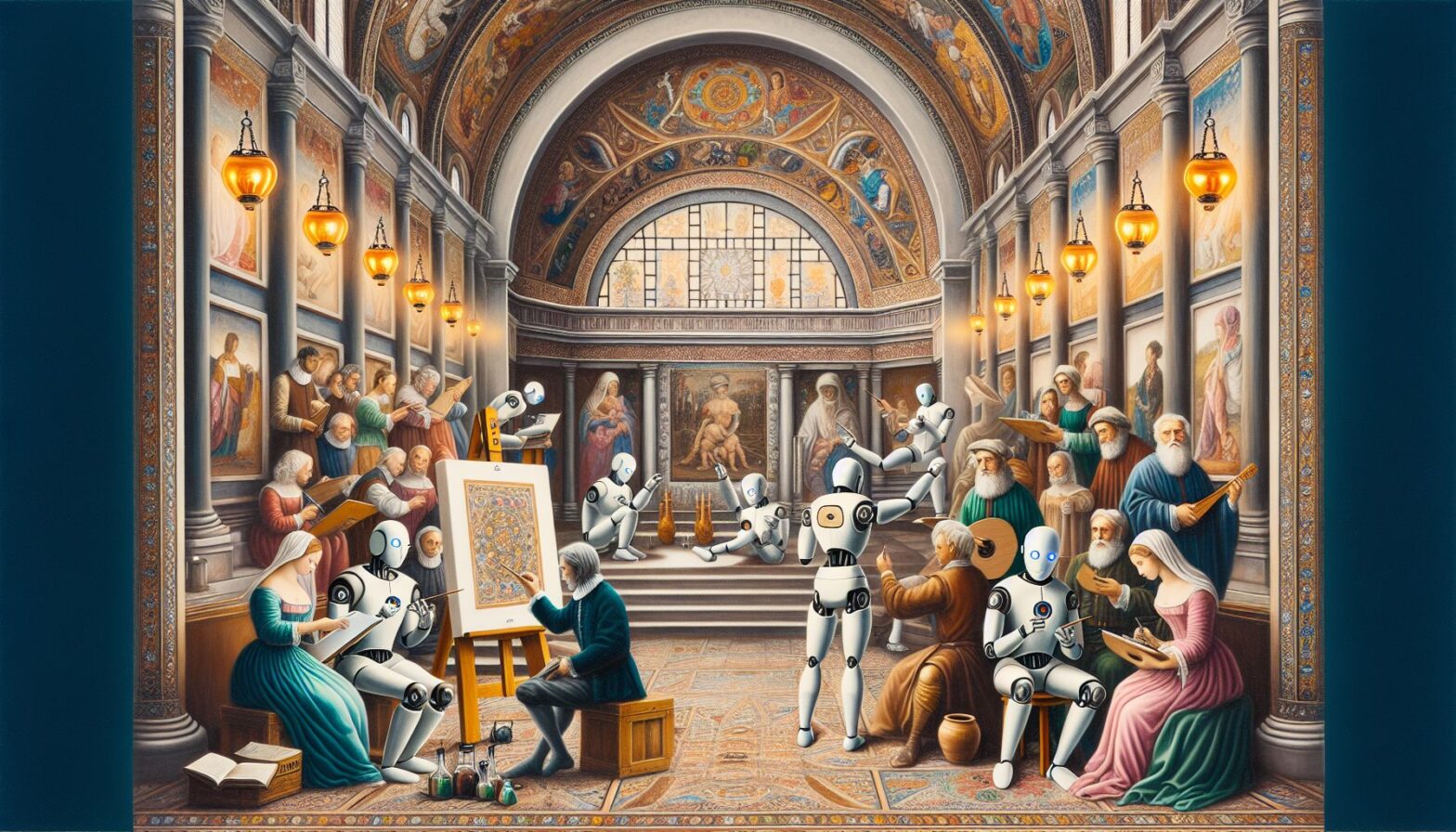
Look, AI and creativity do sound like strange bedfellows. When someone first asked me “Can an AI really paint like Da Vinci?” I laughed. But here’s the thing: these systems aren’t trying to replace human artists. They’re becoming creative partners. Modern AI can learn your painting style, help you compose music, or even brainstorm ideas for your next novel.
What really gets me is how the whole dynamic has shifted. We used to think of technology as just another tool, like a better paintbrush or a digital tuner. Now AI is actively participating in the creative process. It’s not just helping, it’s actually contributing ideas.
Neural Brushstrokes and Enhanced Creativity
Take DALL-E from OpenAI. This thing is absolutely wild. You type “a two-headed flamingo under a golden moon” and boom, there’s your image. Want something completely ridiculous like “goats dancing on rollerblades”? DALL-E doesn’t even blink. It just delivers.
But here’s what I find really interesting: AI isn’t replacing artists. It’s giving them a new kind of creative partner. Artists can now explore ideas that would take hours to sketch out. They can test weird concepts, create impossible landscapes, or experiment with styles they’ve never tried. It’s like having a collaborator who never gets tired and always says “yes” to your craziest ideas.
A True Orchestra of Code: AI in Music
The music side of this is equally mind-bending. AI isn’t just dabbling in visual art anymore, it’s composing symphonies. And honestly, some of them are pretty good.
AIVA is probably the most famous AI composer out there. This system can write orchestral pieces from scratch, and I’ve heard some that genuinely gave me chills. Need a dramatic score for your indie film? AIVA can generate a foundation, then you can tweak it until it’s perfect. The AI handles the heavy lifting while you focus on the emotional details.
What surprises me is how these systems aren’t just cold, mathematical compositions. They’re actually creating music that feels fresh and unexpected. Musicians are using AI to break out of their usual patterns and discover new sounds.
Synergy Sweet Spots: Studios and Sound Designers
Sound designers are having a field day with AI tools. Instead of spending hours hunting through sample libraries, they can describe what they want and let AI generate original audio. Game studios are using AI to create adaptive soundtracks that change based on player actions. Film composers are using it to rapidly prototype different moods and themes.
The really cool part is watching non-musicians create decent music with AI assistance. People who couldn’t read sheet music are now composing tracks that sound professionally produced. The barrier to entry has dropped dramatically.
The Future: Dreams and Dilemmas
Now, I’d be lying if I said this was all sunshine and rainbows. There are real concerns here. What happens to traditional artists when AI can create professional-quality work in minutes? How do we value human creativity when machines can mimic it so well?
I think we’re still figuring out the answers. Some artists feel threatened, and I get that. Others are embracing AI as the ultimate creative tool. The truth probably lies somewhere in the middle. AI might change how we make art, but I doubt it’ll eliminate the human need to create and express ourselves.
What excites me most is watching artists find unexpected ways to use these tools. They’re not just replacing traditional methods, they’re inventing entirely new forms of creative expression. And honestly, that feels pretty human to me.