When Electoral Earthquakes Reshape Strategic Assumptions
Germany’s February 23, 2025 snap election delivered results that will echo through European security architecture for years. Friedrich Merz’s CDU/CSU won approximately 28.5% of the vote, securing the largest parliamentary share but still short of the decisive mandate German voters might once have delivered. More significant than what the center-right gained was what the center-left lost. The SPD collapsed to 16.4%, its worst federal result since 1945. This isn’t merely a statistical notch on a scorecard. It represents the effective end of a particular model of German governance, one where the Social Democrats could anchor coalition discussions through moral authority and historical legitimacy. That era is finished.
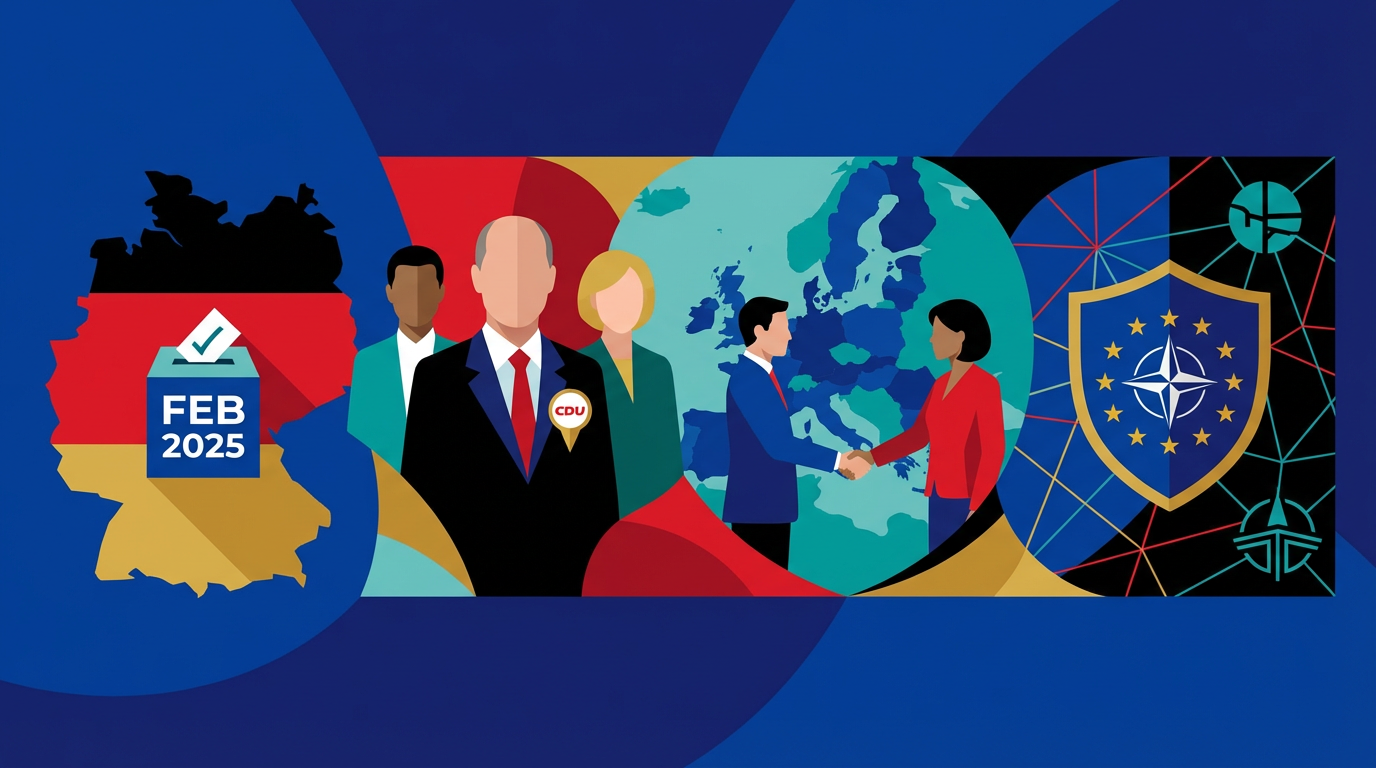
The real shock, though, was the AfD. Germany’s far-right alternative party finished second with 20.8%, its strongest performance in any federal election. This transforms the political geometry in ways worth sitting with for a moment. No party can govern with the AfD under current constitutional agreements, yet the party’s consolidation of roughly one-fifth of the electorate signals something deeper about German anxieties over immigration, economic vulnerability, and national identity in an unstable international environment. You can check the official results through the Federal Returning Officer Official Results, but the numbers alone don’t capture why Merz finds himself navigating a fundamentally different political landscape than his predecessors faced.
The Debt Brake and the €100 Billion Question
Here is where the institutional complexity gets genuinely consequential. Germany’s constitutional debt brake, the Schuldenbremse, was designed in 2009 as a safeguard against fiscal recklessness. It limits structural deficits to 0.35% of GDP and has become almost sacred in German political culture. Yet Merz’s government inherited pressure to finance over €100 billion in new defense and infrastructure spending. This creates a real constitutional dilemma, not a mere political inconvenience.
To unlock those funds without dismantling the debt brake, the government proposed invoking emergency provisions that allow deviation during exceptional circumstances. Technically possible, but politically treacherous. It requires either supermajority support in the Bundestag or narrower coalitional mathematics that might fragment the government before it truly begins. The SPD, reduced to junior coalition partner in most scenarios, faced pressure from its own base to resist what could easily be framed as unlimited military expenditure. The Greens, similarly, had to navigate the contradiction between their security concerns about Russian aggression and their traditional skepticism toward military spending. These aren’t problems you solve through clever negotiation. They require genuine democratic trade-offs.
The 3% Target and the Remilitarization Question
Merz signaled support for Germany spending 3% of GDP on defense, well beyond NATO’s 2% benchmark. To appreciate what that actually means, consider that Germany spent roughly 1.6% of GDP on defense in 2024. Moving toward 3% transforms military spending from a supplementary policy concern into a central budget priority. This isn’t bureaucratic creep or inflation-driven expansion. It’s deliberate structural reorientation.
The historical parallel worth considering carefully, but not naively: Weimar Germany’s rearmament in the 1930s emerged from nationalist resentment and aggressive expansionism. This situation is fundamentally different. Merz’s proposed expansion reflects a defensive response to Russian aggression in Ukraine and broader NATO commitments. The motivations are categorically distinct. But the parallel still matters, because it reminds us that sustained high-level military spending does reshape a nation’s economic priorities, strategic culture, and international posture. Germany isn’t becoming an aggressive power. It’s becoming a more militarized European power, which carries its own long-term implications that deserve scrutiny beyond the immediate security logic.
Coalition Architecture and the Stability Question
Merz faced real complexity in constructing a viable coalition. A CDU/CSU-SPD grand coalition remained mathematically possible but politically fraught after the SPD’s catastrophic result. A three-way coalition including the Greens presented different tensions: defense spending prioritized against climate spending, fiscal orthodoxy against Green preferences for green infrastructure investment. The European Council on Foreign Relations Germany Analysis offered sophisticated assessment of these dynamics, but the fundamental reality is that Merz inherited a parliament fractured in ways requiring either fragile consensus-building across ideological lines or narrow coalitions vulnerable to defection.
This matters for European security because coalition stability directly affects Germany’s ability to sustain military commitments and coordinate with NATO allies. A government barely commanding parliamentary support may struggle to maintain consistent Ukraine policy or keep defense industrial expansion on track across multiple quarters. The SPD’s weakness actually creates some opportunity for Merz. A party reduced to junior coalition status becomes less able to obstruct security policy through protest and internal rebellion. At the same time, the Greens’ structural role in coalition mathematics gives them real leverage over spending details and oversight mechanisms.
What This Means Beyond Germany’s Borders
The Merz government represents Germany’s renewed acceptance of military competition as a permanent feature of European politics, not a temporary crisis response. That shift has implications for NATO burden-sharing discussions, European defense industrial consolidation, and how the European Union conducts strategic autonomy debates. It also signals that German political consensus around military restraint, carefully constructed since 1945, has eroded enough that competitive rearmament now lives comfortably within mainstream political discourse.
But remilitarization and strategic reorientation don’t resolve the underlying questions about Europe’s long-term direction. Does Germany build defense capacity primarily as deterrent, or is it preparing for sustained conflict? Do higher defense budgets come at the expense of social cohesion investment, which the AfD’s rise suggests remains genuinely fragile? How do European allies coordinate military spending increases without triggering the kind of arms race dynamics that historically destabilized great power politics? These questions don’t have clean answers because they reflect genuine tensions between competing values and strategic needs.
The Merz government’s early months will reveal how these tensions get managed. Watch the defense spending trajectory, the attention paid to industrial policy coordination with European partners, and how the government addresses the economic anxieties that fueled both SPD collapse and AfD rise. Those details matter more than the headline story about Germany finally spending more on defense. What remains genuinely open is what kind of European security architecture emerges when the continent’s largest economy decisively embraces military rearmament as a permanent structural requirement.