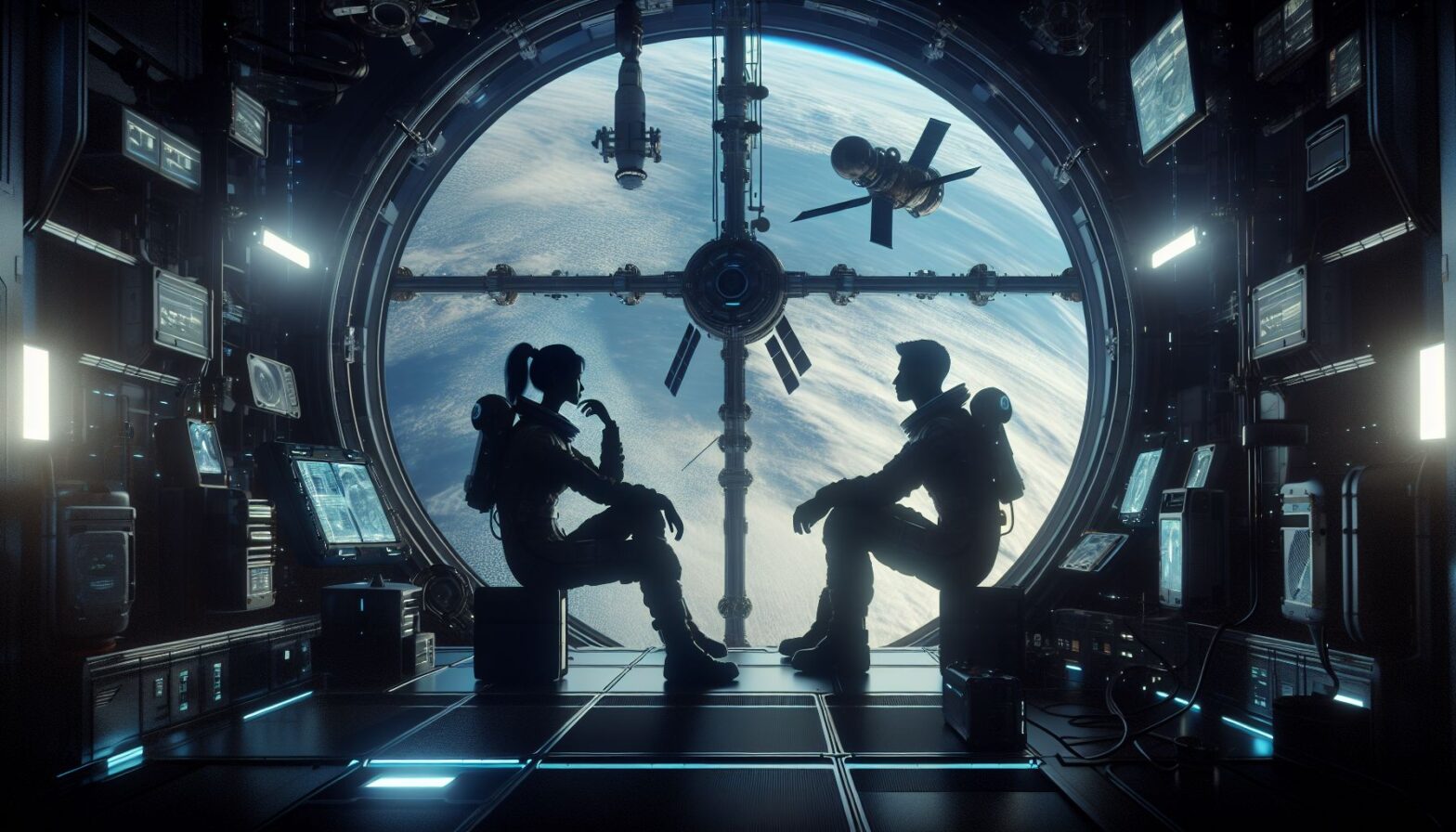
Hey explorers of the great unknown! Have you ever looked up at the night sky, glimpsing the sprinkling of stars, and wondered about our place in this vast universe? Well, I just spent half my evening doing exactly that (and I promise it wasn’t just another stargazing procrastination tactic). Today, I couldn’t be more excited to talk about the future of space travel—a realm that’s been racing past what the sixties’ brainstorming brains at NASA even dared dream.
The Big Players Shaking Things Up
Forget what textbooks once told you—space travel is no longer a band of suit-clad men with slide rulers huddled in a Houston basement. It’s more like Elon Musk, Jeff Bezos, and Richard Branson playing chess with real-life rockets as their pieces! These space cowboys aren’t just here for the zero-g selfies (though, can you imagine the epic space station selfies?). They’re building the highway that could link Earth to infinity and beyond.
SpaceX: Landing Rockets Like It’s No Big Deal
Remember when SpaceX landed their first reusable Falcon 9 rocket? It seemed impossible! A rocket stage setting down as gently as a hummingbird—on a barge—out in the sea? I’m still not over those awestruck scenes that looked like they belonged in a sci-fi movie. But there it was: vision made real! SpaceX keeps pushing us forward not just as onlookers but potential travelers to places like the Moon and eventually Mars. That colonization dream? Musk hasn’t forgotten about it.
Bezos’s Blue Origin: Taking the Scenic Route to Space
Less dramatic than his competitors, Jeff Bezos’s Blue Origin aims for both lunar and terrestrial goals: smoother rides and ways to give Earth some breathing room. “Earth needs time to heal,” they argue. Think settling on an asteroid sounds futuristic? Try their vision of massive “O’Neill colonies” floating in space. It’s ambitious, maybe crazy, but then again, so was landing on the moon.
The Tourism Angle: Space for Everyone?
Here’s where things get interesting for us regular folks. These companies aren’t just building rockets for astronauts anymore. They’re designing experiences for people with enough money and nerve to strap themselves to a controlled explosion. Virgin Galactic has already started taking paying customers on suborbital flights. Sure, it costs more than most people’s houses right now, but remember when computers filled entire rooms?
What This Actually Means for Us
I’ll be honest—part of me gets swept up in the excitement, and part of me wonders if we’re getting ahead of ourselves. The technology is advancing fast, but space travel is still incredibly risky and expensive. We’re talking about an environment that wants to kill you in about a dozen different ways.
The Reality Check
Let’s be real for a minute. While billionaires are racing to Mars, we still have plenty of problems down here on Earth. Climate change, poverty, inequality—the list goes on. Some critics argue we should fix our own planet before we start trying to colonize others. It’s a fair point, though I’d argue that space technology has historically led to innovations that help us here too.
Where Are We Actually Headed?
The next decade will probably determine whether this space renaissance is the real deal or just expensive stunts. NASA’s Artemis program wants to put humans back on the Moon by the mid-2020s. SpaceX is still targeting Mars missions in the 2030s. Blue Origin is building their New Glenn rocket for deeper space missions.
Will we see regular people taking weekend trips to orbit? Maybe not in the next ten years, but it’s not as crazy as it sounded even five years ago. The technology is getting better, costs are coming down, and the safety record is improving. Whether we’re ready for it as a species is another question entirely.