My grandmother’s kitchen smelled of allspice and cinnamon long after the fire died. She’d stand over a pot of mloukhiyeh, stirring with a patience that seemed to come from another century, and when she talked about the village she left as a girl, she never mentioned politics or borders. She talked about the mulberry tree in the courtyard, the way her mother dried the leaves for winter tea, the taste of fresh goat cheese wrapped in grape leaves. The borders moved, she’d say, but the recipes didn’t. They just crossed into new kitchens, whispered in new languages, and sometimes, they were forgotten.
I grew up in a house where food was a map. Every dish traced a route from somewhere else—places I’d never seen but could taste in the sour tang of sumac or the deep, earthy warmth of slow-cooked wheat berries. My father’s family came from a village in what’s now northern Lebanon, once just another corner of a sprawling Ottoman province. My mother’s roots reached into Palestine, where her grandmother baked flatbreads in a communal oven and gathered wild za’atar from the hills. When the borders were drawn, families scattered. Some fled, some were forced out, some stayed and became strangers in their own homes. And in that chaos, the food changed. Not because anyone wanted it to, but because the hills were suddenly on the other side of a checkpoint, the markets closed, and memories were deliberately buried.
This is a story about how borders reshaped what people ate—and what they forgot. It’s about the dishes that survived because someone remembered, and the ones that vanished because no one did.
The Ottoman Kitchen: A Shared Language Before the Lines
Before the borders, there was a culinary continuum. From the Balkans to the Levant, from Anatolia to North Africa, the kitchens of the Ottoman world spoke in overlapping dialects. Pistachios from Aleppo, olive oil from the Aegean, yogurt from the Central Asian steppes—ingredients moved along trade routes like stories. Techniques traveled too, passed between palace kitchens and village hearths. A dish like yaprak sarma—stuffed grape leaves—appeared in Istanbul, Beirut, and Jerusalem, each version a little different but unmistakably kin.
What held this together wasn’t just empire. It was movement. Merchants, pilgrims, soldiers, brides—they all carried their tastes with them. A spice blend from Aleppo might end up in a Sarajevo kitchen. A method for preserving lemons, born in the Maghreb, could appear on a Greek island. The food was a living archive of connection, written in olive oil and sumac.
Then the borders came. After World War I, the Ottoman Empire was carved into mandates, protectorates, and new nations. The lines on the map sliced right through kitchens. A family that had always bought its cheese from a village twenty miles away now needed a passport to get there. Markets shrank. Trade routes snapped. And that shared culinary language began to fracture, dialect by dialect.
The Great Unmixing: How Nation-States Rewrote the Menu
In the early twentieth century, building a nation meant more than flags and anthems. It meant inventing a national cuisine—a set of dishes that could be claimed as uniquely Turkish, Greek, Lebanese, or Israeli. This often meant scrubbing away the shared origins of food. A dish cooked for centuries by both Greeks and Turks was suddenly rebranded as the sole heritage of one group.
Look at baklava. Its origins are fiercely contested, with Turkey and Greece both claiming it as their own. But the truth is messier and more interesting: layered pastry desserts sweetened with honey and nuts existed across the region long before modern borders. The same goes for hummus, falafel, and so many other staples. The ownership debates that flare up today aren’t really about food history. They’re about nationalism, about drawing lines through shared tables.
But the real loss happened quietly, in home kitchens. When populations were exchanged—Greeks from Anatolia, Turks from the Balkans, Arabs from the newly formed state of Israel—people left behind more than houses. They left behind ingredients. Specific herbs, certain breeds of sheep, particular varieties of wheat. A dish that depended on a local cheese might survive in one place and die in another. Refugees recreated what they could, swapping ingredients, tweaking techniques. Over time, the original was forgotten, and the adaptation became the new tradition.
The Disappearing Dishes: What Borders Erased
Some foods are so tied to a specific landscape that they can’t survive displacement. The baladi eggplant of Palestine, small and intensely flavored, nearly vanished when farmers were pushed off their land. Kashkaval cheese from the Balkans, once made by both Muslim and Christian shepherds, became scarce as communities were separated. Wild greens—hindbeh, khubayzeh—that women foraged in the hills became unreachable when those hills were suddenly on the other side of a checkpoint.
Other dishes were lost not because ingredients disappeared, but because the knowledge did. My grandmother’s generation knew how to preserve everything: eggplants dried in the sun, tomatoes reduced to a thick paste, grape leaves brined for winter. They knew which wild plants were edible, which roots could flavor a stew. But in the rush to modernize, to urbanize, to leave behind the peasant past, that knowledge wasn’t always passed down. Borders accelerated the forgetting. When families scattered, the grandmother who held the recipes might end up in a different country, a different continent, speaking a language her grandchildren didn’t understand.
I think about kishk, a fermented mix of bulgur and yogurt that was once a staple across the Levant and Anatolia. It kept for months without refrigeration—a perfect food for shepherds and travelers. Today, it’s hard to find. Industrial yogurt and refrigerators made it unnecessary. Borders made it impractical. And so a taste that once connected millions of people faded into memory.
What Survived: The Stubborn Dishes
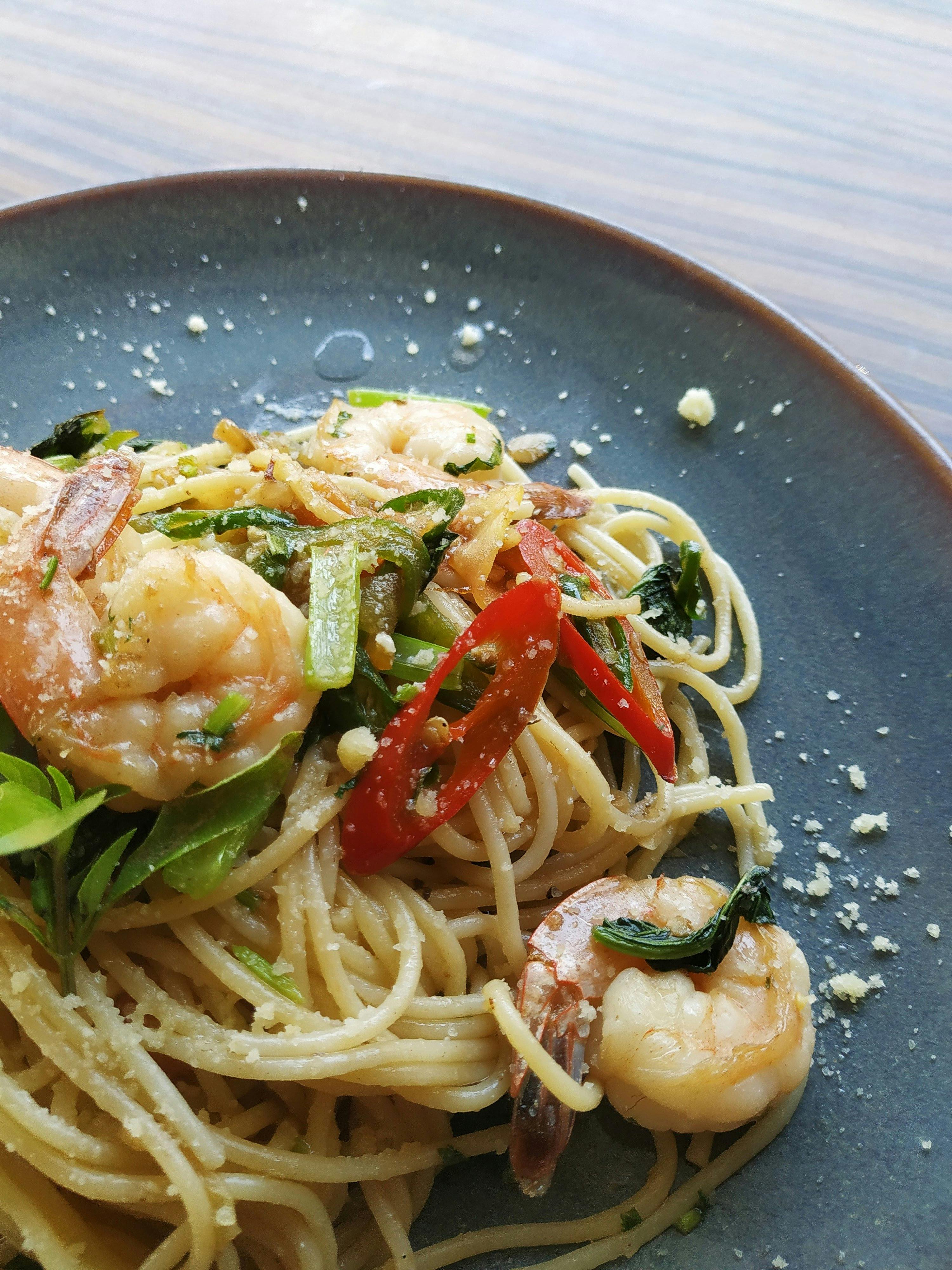
Yet some dishes refused to die. They crossed borders hidden in the minds of grandmothers, written on scraps of paper tucked into luggage, remembered in the smell of a neighbor’s kitchen. Mujaddara—lentils and rice with caramelized onions—is one of these survivors. It’s ancient, cheap, and deeply comforting. You’ll find it from Egypt to Syria, from Lebanon to Jordan, each version slightly different but unmistakably the same dish. It survived because it’s made from ingredients that are everywhere, and because it tastes like home.
Maqluba is another. This upside-down rice and vegetable dish, often layered with eggplant and chicken, is a centerpiece of Palestinian cuisine. When Palestinians were displaced, maqluba traveled with them. It became a dish of memory, a taste of the villages left behind. Today, you can find it in Amman, in Dubai, in Chicago. Each time a pot is flipped onto a platter, it’s a small act of defiance against erasure.
And then there are the dishes that changed but didn’t disappear. Shakshuka, eggs poached in a spicy tomato sauce, now shows up in trendy brunch spots from London to New York. Its origins are North African, but it was embraced in Israel by Jewish immigrants from Tunisia and Morocco. It crossed borders, changed contexts, and became something new while still carrying its history. That’s the thing about food: it adapts. It survives by transforming.
The Memory Keepers: Women Who Saved the Recipes
In every displaced community, it was mostly women who kept the food alive. They cooked in refugee camps, in cramped apartments in foreign cities, in kitchens that smelled nothing like home. They taught their daughters, and their daughters taught theirs. The recipes were never written down—they were felt. A pinch of this, a handful of that, the sound the dough makes when it’s ready.
My great-aunt, who fled her village in 1948, carried nothing but a small bag of seeds. She planted them wherever she went—a kind of portable garden. The tomatoes that grew from those seeds were the taste of her mother’s kitchen. She saved them year after year, drying the seeds on her windowsill, passing them to anyone who asked. When she died, her daughters scattered those seeds in their own gardens, in three different countries. The tomatoes are still growing.
This is how food survives borders. Not in cookbooks or museums, but in the hands of women who refuse to forget. They are the real archivists, the keepers of a history that no government can claim and no border can erase.

The New Borders: What We’re Losing Now
Today, the threats to food memory are different but no less powerful. Globalization has brought us incredible access to ingredients and cuisines, but it has also flattened them. A dish that once varied from village to village is now standardized for a global palate. Industrial agriculture has replaced local varieties with uniform crops. The wild greens that my grandmother foraged are now considered weeds, sprayed with pesticides, or simply forgotten.
There’s also a new kind of border: the border between generations. In many diaspora communities, the grandchildren don’t speak the language, don’t know the stories, and don’t cook the food. They might eat a version of it in a restaurant, but the intimate knowledge—the way the dough should feel under your palm, the exact moment the onions turn sweet—is lost. When the grandmothers die, the recipes die with them.
I see this happening in my own family. My younger cousins love kibbeh, but they buy it frozen. They don’t know how to pound the meat with bulgur until it becomes a smooth paste, how to shape it with a hollow for the spiced filling. They don’t know the stories that go with it—the village weddings, the communal kitchens, the grandmother who made it best. The food survives, but the memory thins.
Reclaiming the Forgotten Table
So what do we do? We cook. We ask questions. We write things down. We invite our elders into the kitchen and listen. We plant those seeds. We teach our children not just to eat but to taste—to taste the history in a spoonful of lentil soup, the geography in a leaf of stuffed grapevine.
Food is one of the few archives that ordinary people control. No government can seize it, no border can fully contain it. A recipe can cross a checkpoint in someone’s memory. A taste can preserve a village that no longer exists. When we cook the dishes of our grandmothers, we are doing something radical: we are insisting that their world mattered, that their knowledge was valuable, that their lives were not erased by the lines someone drew on a map.
In my kitchen, I keep a jar of za’atar that my aunt brought from her garden near Nazareth. It’s a mixture of wild thyme, sumac, sesame seeds, and salt. Every time I open it, the smell takes me somewhere I’ve never been. That’s the power of food. It doesn’t just feed the body. It feeds the memory of a world that borders tried to erase.
FAQ: Common Questions About Food, Borders, and Memory
Why did some dishes disappear while others survived?
Survival often depended on the availability of ingredients and the mobility of the people who cooked them. Dishes that used local, seasonal, or wild ingredients were harder to recreate after displacement. Dishes that relied on pantry staples like lentils, rice, and onions could be made anywhere. Also, some dishes were deliberately preserved as acts of cultural resistance, while others were abandoned as people assimilated into new communities.
How did the redrawing of borders in the Eastern Mediterranean affect food culture?
The dissolution of the Ottoman Empire and the creation of new nation-states disrupted trade routes, separated communities, and sparked population exchanges. This fragmented a once-shared culinary landscape. Ingredients became harder to source, and new national identities encouraged people to distance themselves from foods associated with “the other.” Over time, many dishes were rebranded as uniquely national, erasing their multicultural origins.
What can we do to preserve these food traditions today?
The most powerful preservation happens in home kitchens. Cooking with elders, recording their recipes and stories, and teaching younger generations are essential. Supporting small-scale farmers who grow heritage varieties, foraging responsibly, and documenting local food knowledge also help. On a broader level, resisting the urge to claim dishes as belonging to one nation and instead celebrating their shared histories keeps the full story alive.